


While studying for the many board exams that come with medical training, I remember spending time on a subject called Behavioral Science. Our professor touched on many themes, but the one comment that stayed with me for decades was about the particularly high rates of mental health issues, including suicide, amongst older white men.
At the time, it registered—but not deeply. Like many physicians, I viewed mental health as important in theory, yet distant in practice. To be honest, I often dismissed much of the broader conversation around mental health as exaggerated, politically driven, or simply overblown. Even as a doctor, I didn’t truly feel it.
That changed when I retired from my medical practice.
I went from operating at 130% every day—structure, purpose, urgency—to suddenly having none of it. No schedule. No patients. No clear direction. What I felt wasn’t sadness exactly, but a void. An uncomfortable emptiness that didn’t feel like me. And for the first time, I could genuinely understand how easily a single misstep could pull someone into an abyss they never expected to face.
At first, I filled that space with new professional pursuits. But what truly carried me to the other side came from an unexpected place—a blessing I now call horology.
Yet it wasn’t the watches themselves.
It was the people.
I joined a relatively new watch club—largely composed of men, with a few women, but mostly men. Like-minded men. Men who had found success or were well on their way. Men with passion, curiosity, and direction.
Historically, one thing men are notoriously poor at is talking. Expressing feelings. Opening up. We tend to stay quiet. Reserved. Introverted. I certainly did.
That changed for me through the watch club.
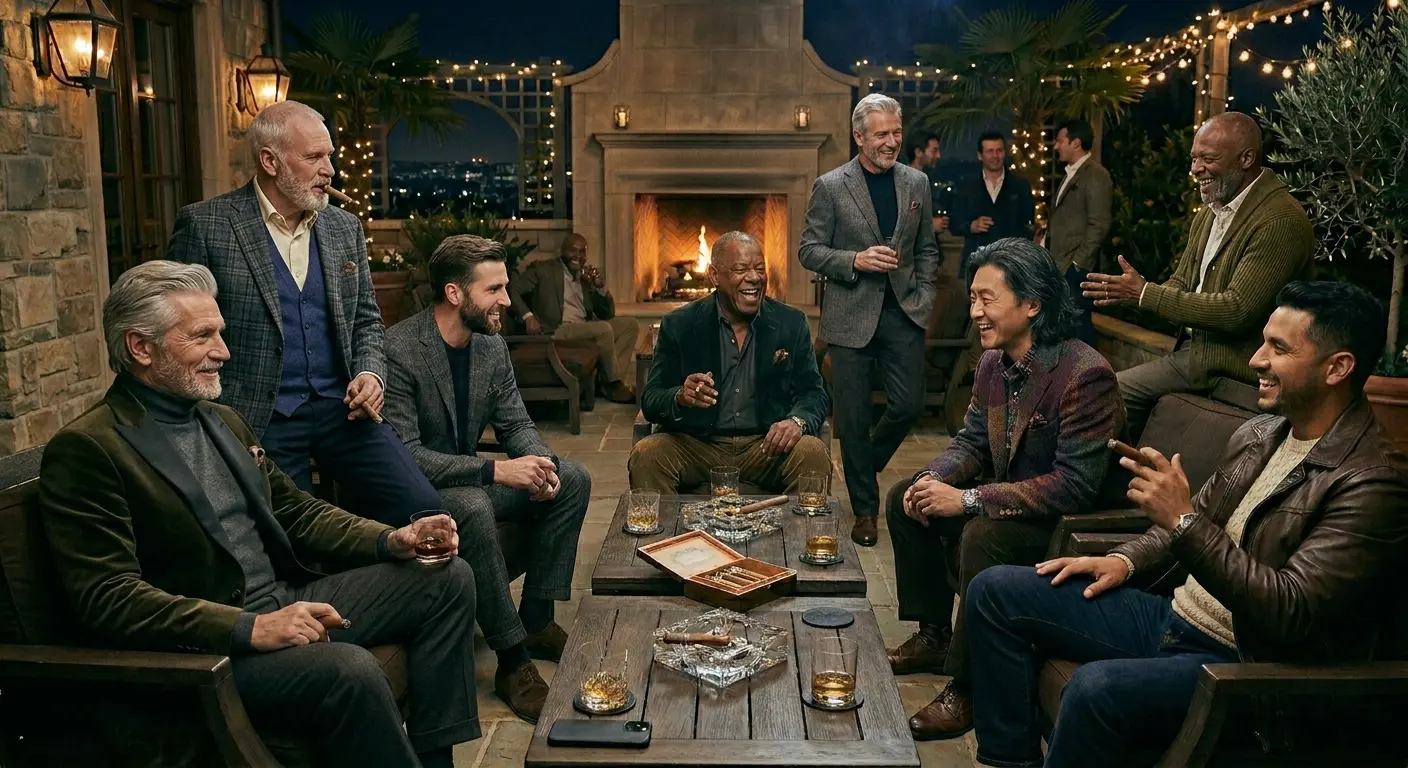
The “aha” moment came after one particular event—ironically, a spirited debate about Patek Philippe versus A. Lange & Söhne. Afterward, about twenty of us sat outside around a large table, cigars lit, the night settling in. And we just… talked.
Not only about watches but about everything.
Imagine it: men ranging from their mid-twenties to their mid-sixties, sitting together, enjoying one another’s company, doing something we rarely allow ourselves to do—talk openly. Let things out. Be extroverts instead of introverts.
That’s when it hit me: this was therapy.
No couch. No clipboard. No diagnosis. Just conversation, camaraderie, laughter, disagreement, vulnerability. And I realized that groups like this—spaces where like minded men can sit, connect, and simply be heard—aren’t a luxury. They’re a necessity, especially as we age.
In that moment, I understood why social connection is so often linked to longevity. Why isolation is so dangerous. Why community matters more than we’re willing to admit.
I genuinely believe that passion based groups like this—not only in horology—should be encouraged, mandatory and perhaps even prescribed, by doctors. We talk about exercise, diet, and sleep. We should also be talking about community, connection and belonging.
I’m deeply grateful for my friends in Horology. Friends I met only months ago, yet feel as though I’ve known for a lifetime. They’ve become something far more meaningful than a shared hobby. They are an ongoing, enjoyable form of therapy—one that I’m certain will keep me grounded, sane, and connected for many years to come.




2 Responses
This is a fantastic editorial. I think it’s important to seek out a community of likeminded people to share something in common. Being able to vent and talk about life is therapeutic. Watch clubs can be a great source of this therapy.
Thank you for taking the time to read it and for such kind words. I couldn’t agree more. When I started collecting, I thought it would be about the watches. What I found instead was a group of people who became real friends, people I can talk to about anything, from a movement finish to the hard parts of life. That’s the therapy you’re describing, and it’s something I never expected from this hobby.