

A Line Several Blocks Long
The line to get into Windup Watch Fair during this last New York Watch Week stretched several blocks. I have stood in a few lines for watches in my short time as a collector, usually outside a boutique, usually for something I was not going to be allowed to buy. This one was different. Nobody in it was waiting for an allocation. They were waiting to get inside a room full of small brands, try things on, and talk to the people who made them.
Inside, the energy was something I had not felt at a watch event in a long time. Teenagers with their first automatic, couples comparing dive watches, seasoned collectors with a Lange on one wrist trying a $600 field watch on the other. It was loud, it was crowded, and it was a lot of fun.
I walked out thinking about my own beginnings in this hobby, because that room was full of people standing exactly where I stood a couple of years ago. So this piece is about microbrands: what they are, what they did for me, what my friends in the community think of them, and why I believe they deserve more respect than they sometimes get.
So, What Is a Microbrand?
A microbrand is a small, independently owned watch company, usually started by one founder or a handful of enthusiasts, that designs its own watches and produces them in limited batches. There is no official definition, but most of them share a few traits:
- They source rather than manufacture. Movements typically come from established suppliers like Seiko, Miyota or Sellita, and cases, dials and hands are made by specialist workshops to the brand’s design.
- They sell direct. Most sell online or through a few select retailers, often through preorders or crowdfunding, which keeps prices far below what a traditional boutique network would demand.
- They are small. Production runs are counted in hundreds or a few thousand pieces, not hundreds of thousands.
- They live close to their community. The founder answers the emails, posts on Instagram and stands behind the table at the fair.
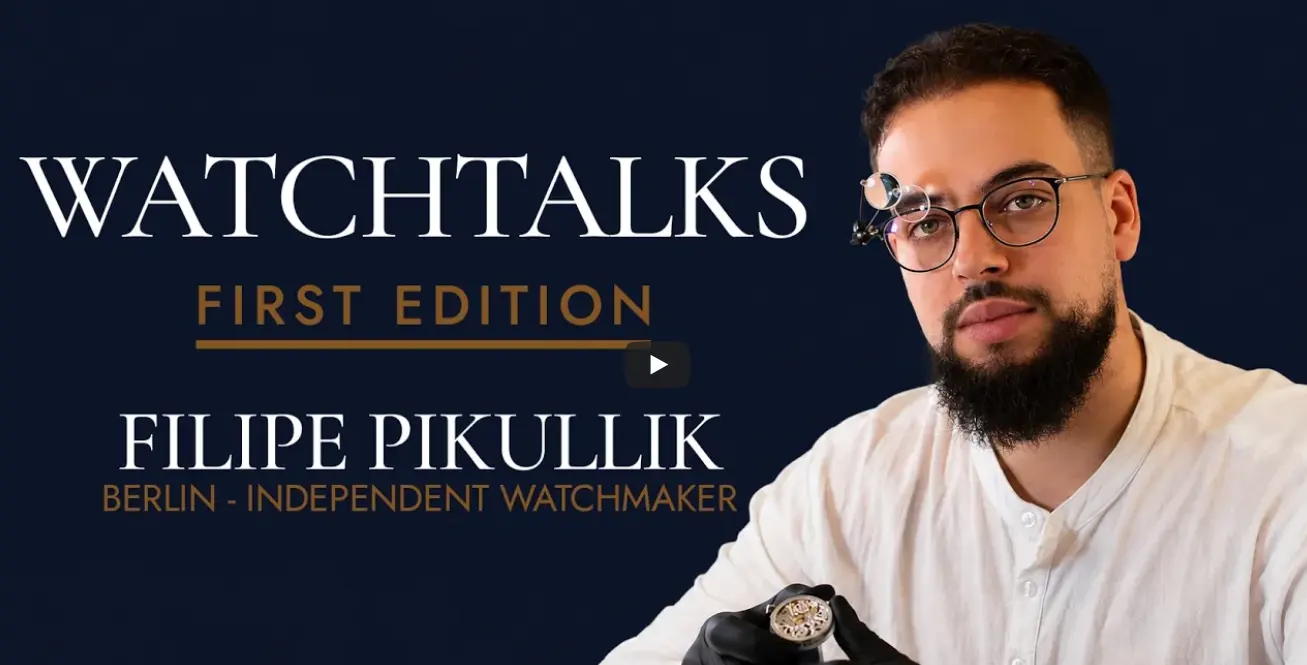
It is worth separating microbrands from independent watchmakers, because the two often get lumped together. An independent like Kari Voutilainen or Felipe Pikullik is a watchmaker building highly finished, often in-house movements by hand, in tiny numbers and at prices to match. A microbrand is a design and product company. Different missions, different price points, and in my opinion both are good for this hobby.
Not everyone draws that line as sharply as I do. A friend who runs a watch club put it bluntly: a microbrand is just another word for independent, only without the prestige. He has a point. Microbrands are small companies using parts made by others, but so are many of today’s big names, which rarely make everything themselves anymore.
Where I Started
I came to watches late. I spent 18 years in the operating room and rarely wore a watch, and I only started collecting at 50, after I retired from medicine. When the bug bit, it bit hard, and like many new collectors I wanted to learn by owning. Microbrands made that possible.
In those early months I bought a lot of them. They were affordable enough that I could try different sizes, styles and complications without a painful mistake, and every new purchase taught me something: what case proportions suit my wrist, what a well executed dial looks like up close, which details I notice every day and which ones I stop seeing after a week. Looking back, those watches were my tuition.
As my budget grew and my taste sharpened, my collection started to change. I became more focused, more curated, and drawn toward independent watchmaking. Most of the microbrands I bought in those early days are gone now.
But not all of them. I still own my Studio Underd0g, my Fears and my SpaceOne, along with a few others, and I enjoy them dearly. They survived every round of curation for a simple reason: they make me smile, and none of them is trying to be something it is not.
Not Haute Horlogerie, and That Is the Point
Let me be clear: microbrands are not haute horlogerie, and the good ones never pretend to be. You will not find hand-engraved bridges or black polished anglage on a $500 diver. What you will find, in the best of them, is personality, and some of them are simply a lot of fun to wear.
- SpaceOne is a young French brand founded in 2023 by Guillaume Laidet and watchmaker Théo Auffret. Their first watch, a jumping hour, sold 500 pieces. Their Tellurium, a planetarium on the wrist showing the Earth, Moon and planets turning around the Sun, sells for around €3,000.
- Fears is a different kind of story: a Bristol firm founded in 1846, dormant for about 60 years, and revived in 2016 by Nicholas Bowman-Scargill, a sixth-generation member of the founding family. Small, independent and quietly elegant.
- Baltic, from Paris, took vintage proportions and honest pricing and turned them into one of the most loved small brands of the last decade.
- Studio Underd0g, out of London, put fruit and pizza on chronograph dials and made people laugh, and then sold more than 2,500 watches in a single nine-hour launch window.
A friend who has worked closely with many microbrands made a point about complications that stuck with me. A jumping hour or a planetarium display for $2,000 to $4,000 is something you simply cannot get from a mainstream brand. At that level, the big houses are not even in the conversation.
The Gateway Into the Hobby
After Windup, I started asking friends in the community what they thought about microbrands. Some are seasoned collectors with Langes and Gauthiers in their boxes, some are newer to the hobby, and one even sells microbrands for a living. I expected a range of opinions, and I got one. But on one point almost everyone agreed: microbrands bring new people into watch collecting.
The reasoning was remarkably consistent. By sourcing their movements, selling directly to collectors and producing in small batches, these brands keep their costs down and their prices within reach. You can buy an amazing dive watch for $500 instead of $5,000. That matters more every year. With the Swiss franc strong and the price of gold climbing, much of Swiss watchmaking has become untouchable for a large part of the hobby. Microbrands fill that gap with real quality and design at accessible prices, and with a variety of brands and models we have never had before.
What struck me most were the personal stories. One friend told me that a year ago he did not even know microbrands existed; today he sells them and has become a serious collector himself. Another reminded me that he was buying Baltic and Henry Archer long before he bought his first Lange or Romain Gauthier. That path is far from unusual. For many of us, the microbrand was the first step, not the last.
There is also something more human about this corner of the hobby. Try messaging the CEO of a big Swiss house on Instagram and see how far you get. Message the founder of a microbrand and he will usually answer, and you will probably meet him in person at the next watch show. These are real people building something they care about, and collectors can feel that.
Small Brands, Real Innovation
The second theme that kept coming up was innovation. Without a century-old catalog to protect or a corporate board to answer to, a small brand can take risks a large one will not, and the whole industry benefits from it.
Some of that innovation is practical. Formex rethought case design and materials while using off the shelf movements. Many microbrands put on-the-fly micro adjustment on their bracelets, a small comfort that some of the major makers were slow to offer. These are the details you notice every single day on the wrist.
Some of it is about value. The large groups carry the cost of celebrity ambassadors, VIP dinners, boutique networks and glossy advertising, and that cost ends up in the price of the watch. Microbrands cannot afford any of that, so their margins are smaller, and very often you get more watch for your money than you would from a mainstream brand.
And much of it is pure creativity. Pizza and watermelon dials are not for everyone, but Studio Underd0g proved there is a huge audience for watches that refuse to take themselves too seriously. The established houses have noticed. When H. Moser & Cie. partnered with Studio Underd0g on a pair of Passion Fruit watches, a perpetual calendar and a chronograph sold together as a set, it was a clear sign that the big names are paying attention. Even the more skeptical friends I spoke with agreed that microbrands raise awareness of watches in general and push the bigger brands to innovate and keep up.
The Honest Caveats
Not everyone was fully sold, though, and the concerns I heard are worth sharing with anyone just starting out.
The most common one was originality. Nobody expects a small brand to manufacture its own movement, but most of my friends want to see the brand’s own ideas and development in the watch. A logo on a white label product, or yet another homage to a famous reference, is hard to get excited about. Several told me that when a design is borrowed, they would rather buy the original, or grab a fun Seiko, and save their microbrand money for the brands that take real design chances. In the end, what draws collectors in is discovering someone’s vision and seeing the care that went into bringing it to life.
The second concern was longevity, especially at the higher end of the microbrand price range. Will the brand still exist in ten or twenty years? Can anyone service the watch? Will it hold any value if it never catches a wave of hype? For a $400 diver those questions hardly matter. For a $3,000 microbrand, they deserve some thought.
The third concern is one I know personally: focus. Because so many microbrands offer great value at low prices, it is easy for a new collector to lose focus and start buying like crazy. I lived that. The low price of entry is exactly what makes it easy to buy ten watches when one or two great ones would have taught you more. My advice to new collectors: enjoy the exploration, but every so often ask yourself which pieces you would still keep in five years. For me, the answer turned out to be a short list.
A Few of My Favorites
People often ask me where to start, so here are some of the brands I enjoy, in alphabetical order. A few of them, like Christopher Ward, Louis Erard and Maurice Lacroix, are older or larger than a true microbrand, but they share the same spirit: real value, real ideas, and a lot of fun.
- Amida: A Swiss name from the 1970s that brought back its Digitrend in 2024, a mechanical watch with a futuristic digital-style display that still looks ahead of its time.
- Atelier Wen: Founded by Frenchmen Robin Tallendier and Wilfried Buiron, with hand-turned guilloché dials made by Cheng Yucai, China’s only master craftsman in the art.
- Awake: A French brand founded by Lilian Thibault that builds watches around recycled materials and awareness of ocean plastic pollution.
- Baltic: Etienne Malec’s Paris brand, the reference point for vintage proportions at an honest price.
- Beaubleu: A French brand that tells time with rotating circles instead of hands. Once you see it, you cannot unsee it.
- Christopher Ward: One of the original direct-to-consumer success stories from Britain, and the brand behind the Bel Canto, a chiming watch at a price no Swiss house would dare.
- CIGA Design: Its Blue Planet won the GPHG Challenge Prize in 2021, the first Chinese watch ever to win at the GPHG, for around CHF 1,800.
- D1 Milano: Italian design flair with bold integrated-bracelet watches at accessible prices.
- Dennison: A revived British name whose ALD collection uses natural stone dials like tiger’s eye and agate.
- Echo/Neutra: Founded in 2018 by designer Nicola Callegaro and engineer Cristiano Quaglia, inspired by the Dolomites. The Cortina 1956 hand-wound chronograph is a beauty.
- Formex: A Swiss brand that rethought case construction with its case suspension system and smart use of materials.
- Furlan Marri: Andrea Furlan and Hamad Marri took 1940s chronograph design and made it accessible again, with a GPHG Challenge Prize along the way.
- Grandeur: Belal Shaher’s American brand, whose Lumillion Tourbillon, billed as the first lumed tourbillon, was nominated at the GPHG in 2025 and sells for around $2,100.
- Kuoe Kyoto: A Kyoto brand founded in 2020 that reinterprets mid-century hand-wound watches, mostly at around $1,000 or less.
- Louis Erard: A Swiss brand that opened its doors to independent talent, with collaborations alongside Alain Silberstein and Konstantin Chaykin.
- MAD Editions: MB&F’s playful, more accessible line, proof that serious creativity can come at a friendlier price.
- Maen: A Swedish brand founded in 2018, known for clean, well-proportioned watches like the Hudson and the Skye.
- Martin Design: Martin Iglody’s studio in Cork, Ireland. The Connemara shows an exposed double balance and moves the crown to six o’clock.
- Maurice Lacroix: Not a microbrand, but the Aikon brought integrated-bracelet style to people who could never get near a Royal Oak.
- Peacock: Better known as a Chinese movement maker, but its own watches include ambitious pieces like a triple-axis tourbillon.
- Serica: A French brand with a quiet, well-thought-out take on the field watch.
- SpaceOne: The jumping hour and the Tellurium. Pure joy on the wrist.
- Studio Underd0g: Fruit, pizza and chronographs. Impossible not to smile.
- Wren: Craig Karger’s dive watch brand, born out of Wrist Enthusiast, with serious specs at around $1,000.
- Xeric: Started by Watchismo founder Mitch Greenblatt and his brother Andrew, with wandering hours, retrogrades and other unusual ways of telling time at affordable prices.
Why They Matter
When I think back to that line outside Windup, I don’t see a passing trend. I see the future of this hobby waiting to get in. A few friends went as far as saying that, especially for young collectors, accessible brands like the ones at Windup may be among the healthiest things happening in watches right now. Without microbrands, the ecosystem simply would not be the same.
I agree. Microbrands are not where my collecting ended, but they are where it began, and a few of them still earn their place in my watch box. They taught me what I like. They introduced me to people who became friends. And they are doing the same thing right now for thousands of collectors who, a few years from now, may be standing in line for a Journe, a Voutilainen or a Pikullik.
There are also signs that the movement is growing up. The same friend told me Formex grew about 25% this year while keeping its watches under $5,000, and that a Studio Underd0g can now be almost as hard to get as a Rolex, or at least certain Tudors, unless you catch it at the drop. Prices are climbing too. Studio Underd0g started at around $450 and now sits closer to $1,350. Norqain, which began as a young brand with watches around $2,750, now has pieces north of $14,500. In his view, as long as Rolex and the other big names keep making their watches harder to get or more expensive, microbrands will survive and thrive.
That success is well deserved. I just hope the best of them remember the collectors who got them there, because accessibility is what started this movement in the first place.
So my take is simple: respect the microbrands. Not every one of them is great, and not every one will be around in twenty years. But the best of them bring originality, honesty and joy to a hobby that can sometimes take itself too seriously.
Now I want to hear from you. Did a microbrand bring you into this hobby? Which one is still in your collection, and why did it survive? Tell us in the comments.