

Gatekeepers, bridge builders, and the role of influencers in the watch ecosystem
I was recently reading the founder’s note in a watch magazine I genuinely admire, written by one of the most important voices this industry has produced, and it got me thinking about a debate that has been simmering in our world for years: what role do influencers actually play in the watch ecosystem, and who gets to decide whose opinion counts?
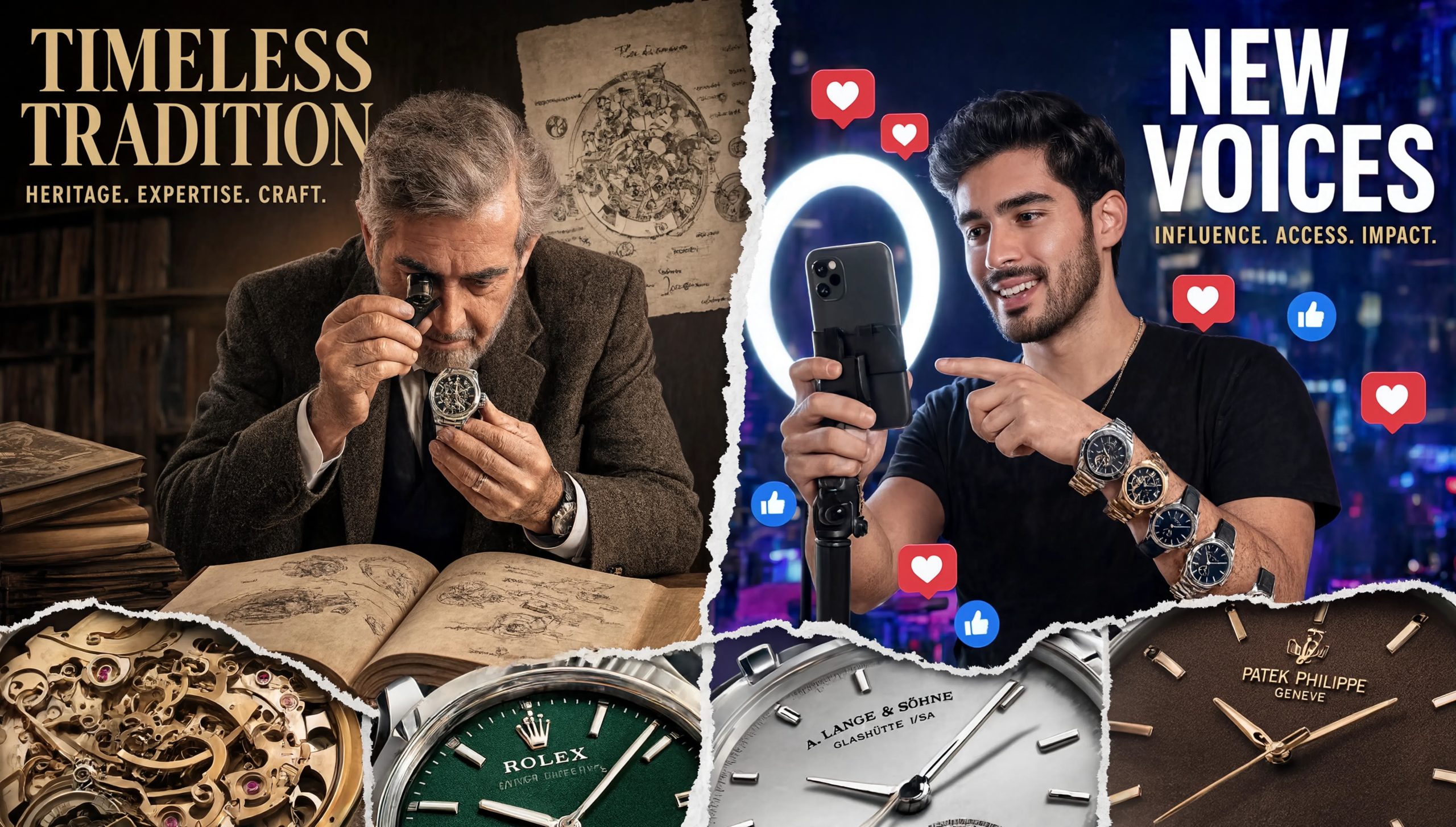
The argument against influencers is familiar by now. Content creation has replaced journalism. Emotion has replaced depth. Too many of the loudest voices in watches today cannot tell you who followed John Harrison in the story of marine chronometry, and some in the industry believe that if you cannot answer questions like that, you have no business recommending watches to anyone.
I want to take that argument seriously, because parts of it are right. And then I want to explain why I think the conclusion is wrong, and why it matters for the future of this hobby.
Where the critics have a point
Depth matters. History matters. A watch is not just a pretty object; it is the current chapter of a story that runs through Huygens, Harrison, Le Roy, Berthoud, and centuries of people solving the hardest measurement problem humanity had ever faced. Understanding that story makes you a better collector, a better commentator, and frankly a better lover of this craft. The publications and people investing in real watch education, deep technical breakdowns, serious historical research, long-form storytelling, are doing something genuinely good for all of us. I read that work hungrily, and I always will.
So this is not a defense of shallowness. Nobody benefits from a watch culture that is all unboxings and no understanding. My problem is not with the call for depth. It is with the way some of the old guard proposes to enforce it.
The pop quiz problem
There is a tendency in traditional watch circles to treat horological trivia as a passport. Name the inventor of the detent escapement and you may enter. Fail, and your opinion is not just less informed, it is illegitimate.
Here is the thing about that kind of litmus test: it does not measure passion, taste, honesty, or the ability to help another collector find a watch they will love. It measures whether you have read the same books as the person asking the question.
It reminds me of the famous bar scene in Good Will Hunting, where the Harvard grad student tries to humiliate a stranger by reciting his course reading almost word for word, as if quoting a book were the same thing as having a thought of your own. Will sees right through him, and so does everyone watching. Memorizing what someone else wrote is not the same as understanding it, and knowledge deployed to embarrass people is not scholarship. It is a costume.
And if that becomes the price of admission to having an opinion, we need to be honest about who gets shown the door. It is not just influencers. It is the overwhelming majority of collectors.
Most people who love watches love them for the design. The proportions of a case. The way a dial catches light at 4pm. The feeling of putting something on your wrist that says something about who you are. They love the community, the meetups, the friendships, the sense of belonging. Some of them will eventually fall down the rabbit hole of escapements and remontoirs. Many never will. Are they lesser collectors? Is their money less green, their passion less real, their opinion less valid?
I consider myself a fairly balanced collector. I love the technical side of my watches. I love learning how my movements work, I love horology as a discipline, and I have spent real time studying it. But I am not the person who can spend three hours talking about a pinion, and I have made peace with that. Does that make me unfit to recommend a timepiece to a friend? To influence, with a small i, someone’s next acquisition? I do not think so. I think it makes me exactly like most of the people who actually keep this industry alive.
What influencers actually do
Strip away the word “influencer,” which has become a slur in certain circles, and look at the function. These are people who bring new eyes to watchmaking. They translate. They make an intimidating, jargon-heavy, historically gated hobby feel accessible to someone scrolling on their phone who has never heard of a tourbillon and does not need to.
Are some of them shallow? Of course. Every field has its mediocrity, including traditional watch journalism. But the best of them have done something the old guard never managed at scale: they made millions of people care. The collector base has never been bigger, younger, or more global, and that did not happen because of 4,000-word essays on the detent escapement. It happened because someone made a 60-second video that made a kid in another country fall in love with a dial.
The horology ecosystem is much wider than any magazine, any jury, and any single definition of expertise. Design-first collectors are not a problem to be corrected. They are the market. They are the community. In many ways, they are the future.
Adapt or fade
This is why I worry about our prestigious institutions, and I will use the GPHG as an example because it is the one that matters most. There are encouraging signs; there is real talk of broadening the awards beyond commercially participating brands to the wider watch industry, and that is exactly right. But broadening the brands while narrowing the people, filtering voices through an ever-higher bar of establishment-approved knowledge, points an institution in two directions at once.
Prestigious institutions do not die because they lower their standards. They die because they stop reflecting the people they claim to represent. If watch media and watch awards decide that the millions of collectors who buy with their eyes and their hearts are not qualified to have a voice, those collectors will simply build their own institutions. They are already doing it. The energy in this hobby right now is not in the awards galas. It is in the group chats, the local clubs, the meetups, and yes, the Instagram accounts.
Build bridges, not walls
So here is my honest suggestion to the guardians of horological knowledge, offered with genuine respect for everything they have built.
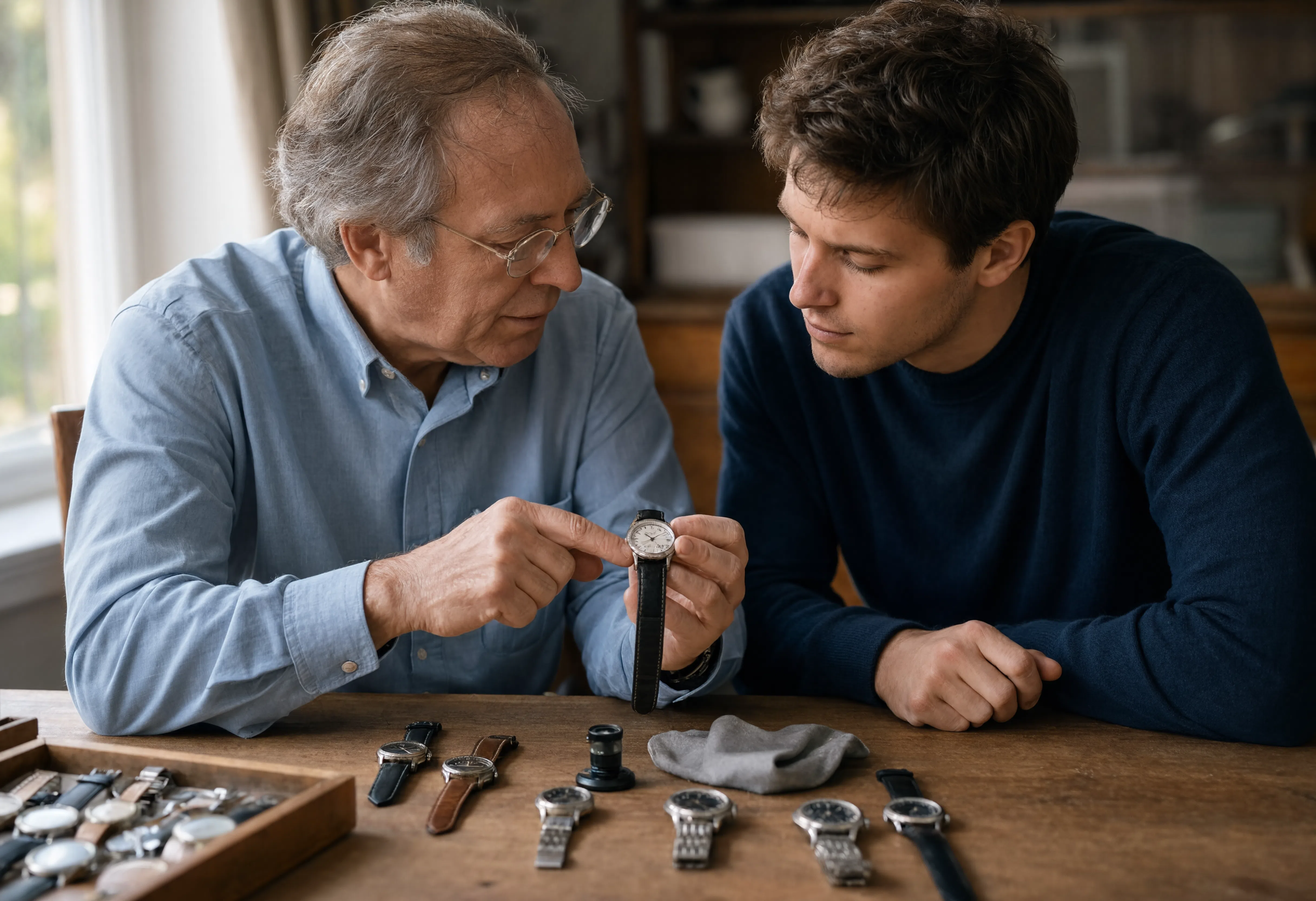
Do not ditch the influencers. Partner with them. Mentor them. You have the knowledge; they have the reach. Imagine what happens when the person with two million followers spends a week being taught by the person who can talk for three hours about a pinion. That is how depth actually spreads. Not through gatekeeping, but through generosity.
The educators of this industry clearly believe knowledge is worth sharing. My only ask is that it come as an open hand rather than a closed door. Teach us because you want more of us to know, not to determine which of us deserve to speak.
Because the answer to “who gets to have an opinion about a watch” has to be everyone who loves one. Anything narrower than that is not protecting horology. It is shrinking it.
3 Responses
Mic drop! This is a beautifully written article that expresses just how much this hobby is alive and thriving. A healthy reaction with valid points is what this industry needs to keep pushing towards as the norm! 👏 bravo
Nice piece. And I genuinely agree with the board’s points here. But I’d add this: Put your money where your mouth is, WatchVote. (Imperfect idiom, I suppose. Clunkier but more accurate: Align your content with your sentiment.) You are right; horological history isn’t for everyone. And yes, it is used for gatekeeping by the most tightly wound enthusiasts/exclusivitists. That said, the story of how a government proffered boatload of money to the person(s) who figured out longitude has the pacing, conflict and double-dealing of a great heist film. Remarkable history. And yet…where are the links here? Where’s the silo or drop-down menu or feed for the specifically for the new or uninformed? I know you’ve created — thankfully — a site with minimal industry influence and mission creep. Congrats! Maybe also create a standing blog — something that does not get pushed off the splash page — specifically for the newbie or the person who wants a bit more guidance or depth on context, calibration or history. (WARNING: Bad watch pun title suggestions upcoming: Helping Hand or Hands On.) Anyway, I’m guessing, broadly, this topic is among the ideas your public blog has been designed to serve. So consider this my first entry. 😉
Mike, thanks for your well written comment. Will look into doing the newbie blog 😉 good idea! Can’t wait to read some of your articles. Looking forward to publish them on the site 🙂