


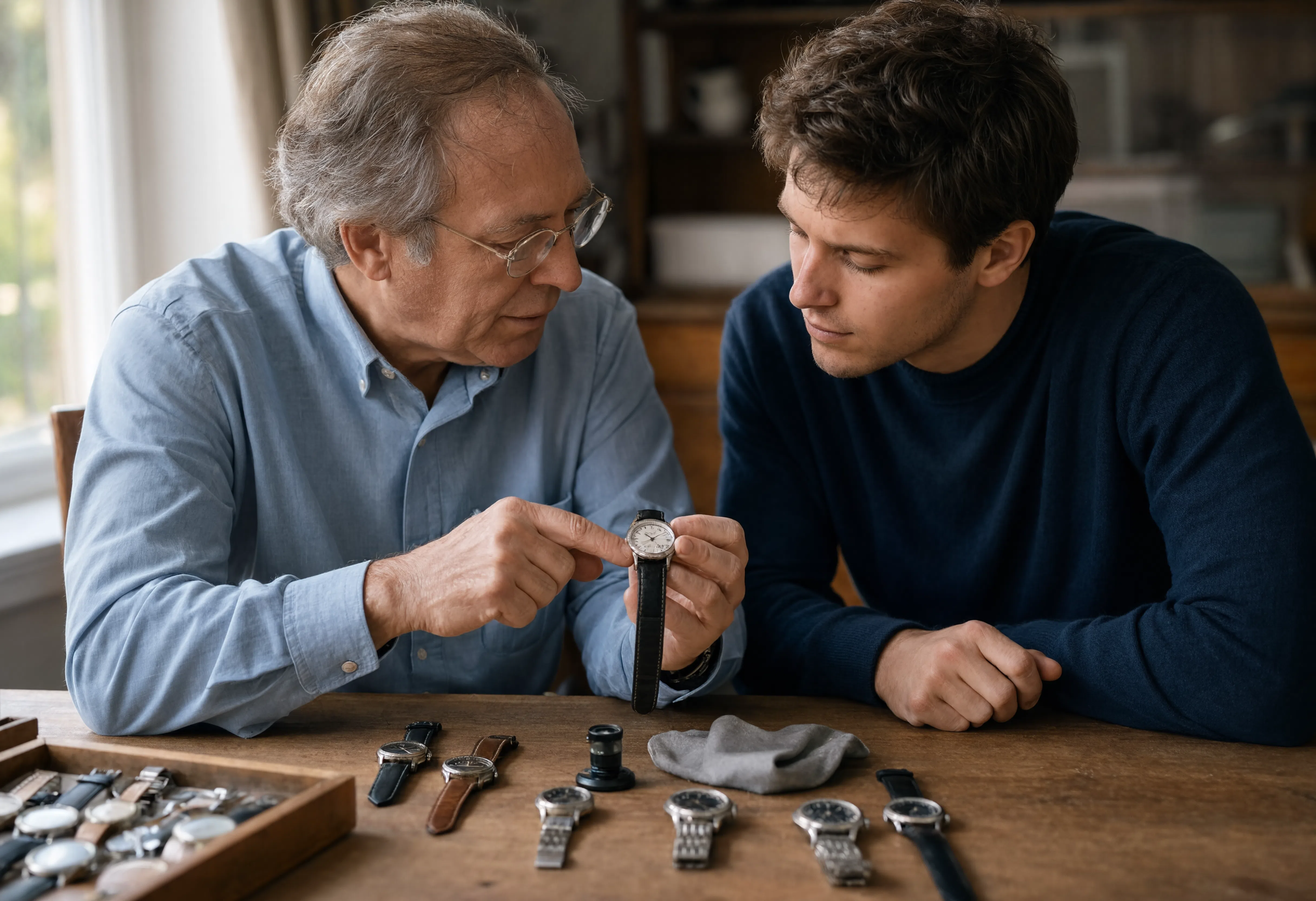
There is a romantic idea of the watch collector as a solitary figure. The lone connoisseur who taught himself everything, who trusts only his own eye, who built a great collection through nothing but instinct and persistence. It makes for a good story. It is also, in my experience, almost entirely fiction.
Every serious collector I know, and I mean every single one, got where they are because someone helped them along the way. Someone answered their naive questions without judgment. Someone told them not to buy that watch. Someone brought them into a room they could not have entered alone. The collectors who pretend otherwise are simply forgetting their own history.
So let’s talk honestly about mentorship in watch collecting: why it matters, what it actually costs you to go without it, where to find it, and what it looks like when it works.
The Price of Learning Alone
Watch collecting punishes ignorance more brutally than almost any hobby I can think of. The tuition for self-education is paid in real money, and the bills can be staggering.
Start with the most obvious danger: fakes. U.S. Customs and Border Protection reported that counterfeit watches seized in fiscal year 2024 alone represented $1.44 billion in lost potential value, more than any other category of fake goods except jewelry. Research from Watchfinder & Co. estimated that roughly 23 million fake watches are circulating in the U.S. market, and that about half of the watches sent to them in a single year were either outright fakes or contained fake parts, the dreaded “frankenwatch.” The Federation of the Swiss Watch Industry has estimated that around 40 million counterfeit watches are produced every year, which is more than Switzerland’s entire annual output of genuine ones. Read that again. There are more fake Swiss watches made each year than real ones.
And fakes are only the loudest way to lose money. The quieter ways are just as costly: the redialed vintage piece bought as original, the polished case that erased half the value along with the edges, the hype watch purchased at the peak that lost forty percent when the market corrected, the impulse buys that pile up in a drawer unworn. None of these mistakes require bad luck. They only require inexperience.
Here is the thing about every one of those errors: a seasoned collector standing next to you would have caught it in thirty seconds. That is the entire argument for mentorship, compressed into one sentence.
What Other Worlds Already Know
Watch collecting likes to think of itself as unique, but on this subject we are late to a lesson other arenas learned long ago.
In business, the data is remarkable. A survey by The UPS Store found that 70 percent of small businesses that received mentoring survived more than five years, double the survival rate of businesses that went without. In a Harvard Business Review survey of CEOs with formal mentors, 84 percent said the relationship helped them avoid costly mistakes and reach proficiency faster, and 69 percent said it led to better decisions. Nobody in the business world debates whether mentorship works anymore. They only debate how to get more of it.
Look at wine, where the entire culture is built on guided tasting, on drinking alongside someone with a more educated palate until yours catches up. Look at the art world, where advisors and veteran collectors shepherd newcomers through a market famous for opacity and fakes. Look at classic cars, where no sane person buys a vintage Ferrari without a marque expert going over it, and where concours culture is essentially a giant mentorship network in blazers. In martial arts, in medicine, in trades, the model is the same: knowledge passes from person to person, not from textbook to student.
I spent my first career in surgery. Nobody learns to operate from a book. You stand next to someone who has done it a thousand times, you watch their hands, and slowly the judgment transfers. Watch collecting is not so different. The eye is trained the same way the hands are: by proximity to mastery.
A Day at Nakano Broadway
Let me tell you what this looks like in practice.
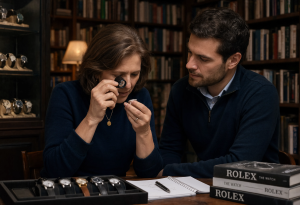
Not long ago I had the privilege of spending a full day at Nakano Broadway in Tokyo with a good friend who is one of the most seasoned collectors I know. He prefers to stay anonymous, which tells you something about him already. The best ones rarely need the spotlight.
I was not there to buy. I was there to watch him buy. And what struck me most was not what he purchased but how he moved. His demeanor was quiet, almost understated, but he was vigilant as a hawk, scanning case after case, dismissing ninety-nine watches in a glance and then locking onto the hundredth, ready to strike at the first sight of extraordinary prey. Forgive the metaphor, but if you had seen him, you would use it too.
I learned more in that one day than in months of reading. I learned what he looked at first on a vintage piece and what he ignored entirely. I learned how he handled a watch, how he questioned a seller, when he walked away, and how little emotion he showed even when I knew he wanted something badly. None of that is in any book, because it cannot be written down. It has to be witnessed.
This is my strongest practical advice in this entire article: do not just ask experienced collectors questions. Spend time with them while they buy. Go to the shows with them. Sit beside them at the auction preview. Watch their hands and their eyes. If they allow it, buy alongside them, and let them look over your shoulder before you commit. One shared afternoon at a dealer’s table is worth fifty forum threads.
Where to Find Your Mentors
The good news is that this hobby, for all its exclusivity at the top, is unusually generous with knowledge. Mentors are hiding in plain sight, and they come in several forms.
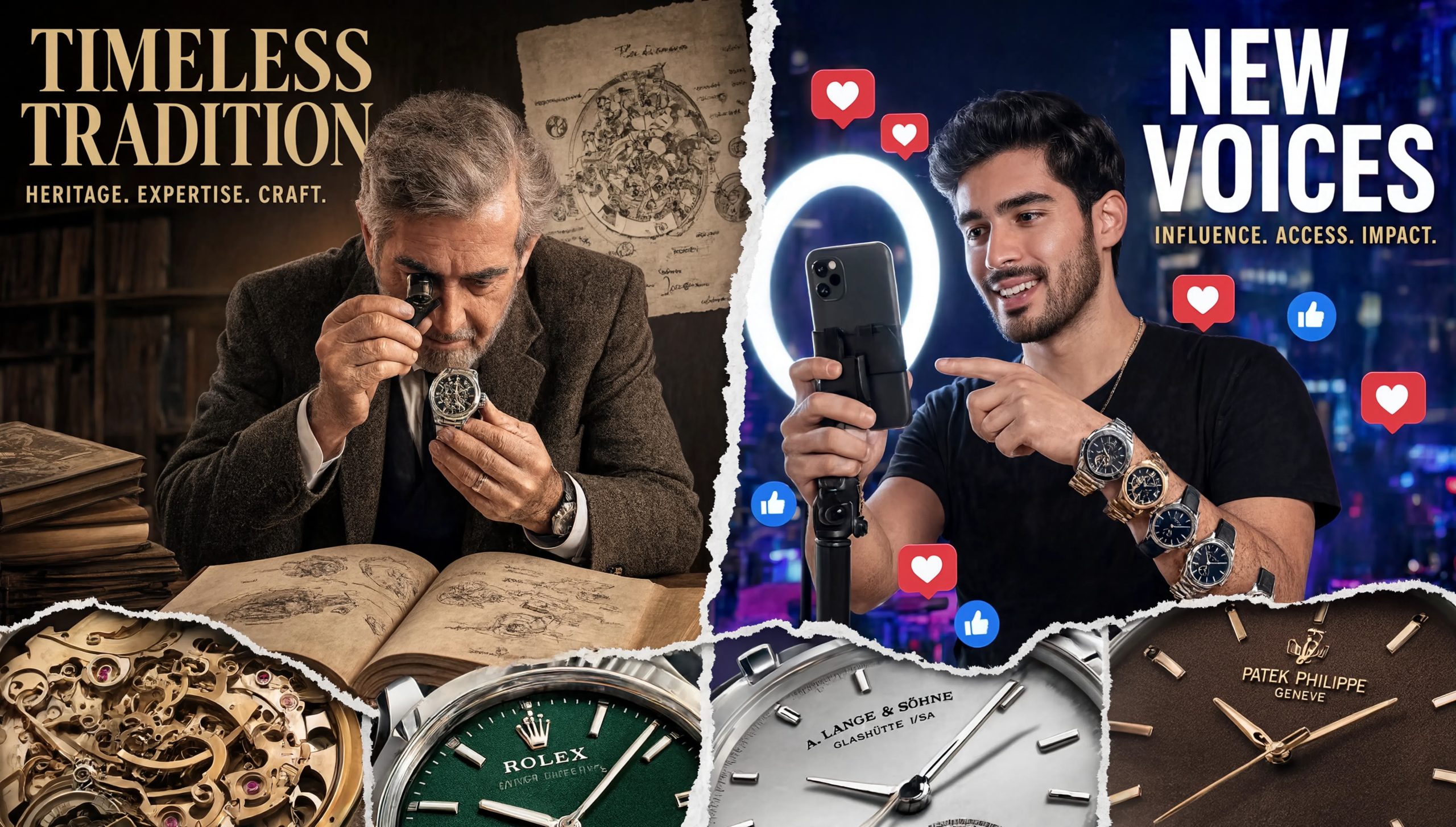
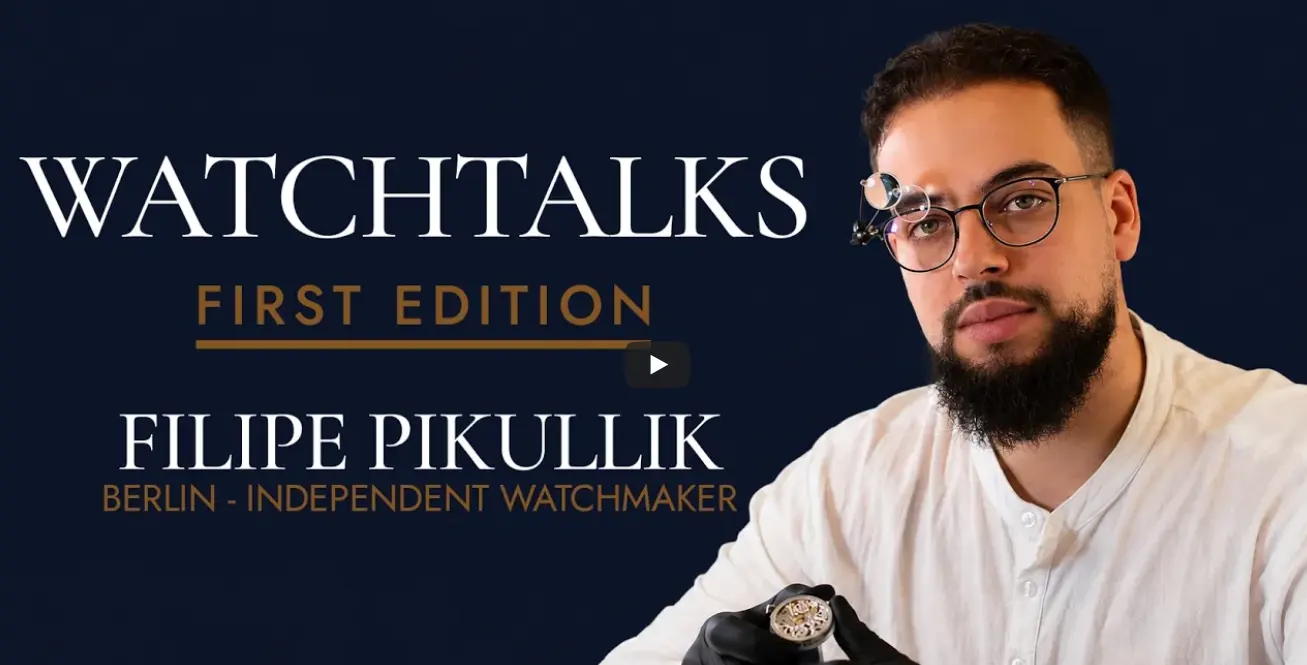
The public educators. We are living in a golden age of freely available expertise. I have learned an enormous amount from watching Eric Wind and Adam Golden break down vintage watches on video, explaining exactly what separates an honest example from a compromised one, and from following dealers like Matt Bain and Morgan Cardet, among others, whose knowledge would have been locked behind trade doors a generation ago. This is mentorship at scale. It will not know your name, but it will save you from your first ten mistakes for free.
The private collectors. Then there is the deeper layer: seasoned private collectors who take a genuine interest in your journey. I have been extraordinarily lucky here. Christian, known to many as @onlybuyingtime, has taught me tons over the years with the patience of someone who remembers what it was like to be new. My good friend Dan, @indieshoro, has opened and widened my horizons in the independent watchmaking arena in ways I could not have imagined. Marty, @itsjudgementtime, has been another constant source of wisdom and perspective along the way. And then there is David, @thetreasury.co, who has truly mentored me in the vintage world. David did something rarer than teaching me what to buy. He changed my entire vision of what ownership means, of the life a watch lives within a collection, of the collector as a custodian in a story that began long before us and will continue long after. It is amazing what these friends have done for me, and not one of them ever asked for anything in return. That, I have found, is the signature of a true mentor.
The communities. Watch clubs, collector dinners, RedBar chapters, get-togethers, brand events, Instagram itself. Show up consistently, be humble, ask good questions, and mentorship tends to find you. Collectors love talking about watches. What they respond to is genuine curiosity rather than someone fishing for a flip.
A word on how to approach these relationships: do not lead with “will you be my mentor.” Lead with sincerity. Comment thoughtfully. Ask a specific question rather than a lazy one. Share your own journey honestly, including the mistakes. The relationship forms on its own, the way friendships do, because that is ultimately what these are.
The Doors Only Mentors Can Open
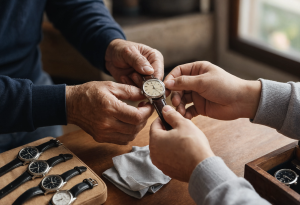
There is another dimension to this that newer collectors often do not see until they experience it: seasoned collectors do not just protect you from mistakes. They open doors.
Anyone who has tried to get an allocation for a sought-after piece, or a seat at an independent watchmaker’s table with a years-long waiting list, knows that money alone is not the currency. Trust is. And trust, in this world, travels through introductions. A respected collector vouching for you can compress years of relationship-building into a single conversation. A mentor’s phone call gets you the atelier visit, the honest answer from the dealer, the chance at the watch that never reaches the open market.
I want to be careful here, because this is not about gaming the system. The reason these introductions work is precisely that mentors do not spend their credibility carelessly. When a seasoned collector opens a door for you, they are staking their reputation on your character. Which brings us back to where we started: be the kind of collector worth vouching for.
Where WatchVote Comes In
This subject sits very close to the core of why WatchVote exists. From the beginning, the mission has been to be the true voice of the collector, a place where our community’s honest sentiment gets heard rather than filtered through the industry’s megaphone. But the mission was never only about voting. It is equally about building a real sense of community, a culture where collectors are genuinely willing to help each other out and make everyone’s collecting journey a better one.
Mentorship is that mission in its purest form. Every experienced collector who takes a newcomer under their wing is doing exactly what this community should be about: passing knowledge forward, protecting each other from expensive mistakes, and making the hobby richer for the next person.
Which leads me to a question I want to put directly to the WatchVote community: would you be open to a mentorship program? Imagine a structured way to connect newer collectors with seasoned ones who are willing to share their experience, whether around vintage, modern, independents, or a specific niche. Would you find that valuable? Would the veterans among you be willing to give some time? And what would make a program like that genuinely useful rather than just another feature? I am asking honestly, because if the answer is yes, we will build it together.
The Debt We All Owe
Here is the truth underneath all of this. Whatever level you have reached in collecting, you got there partly on borrowed wisdom. Someone lent you their eye before you had your own. The only honest way to repay that debt is forward, to the collector who is today where you were five years ago.
So find your mentors. Study the educators, befriend the veterans, and when the chance comes, spend a day watching a master work a room full of watches. And when you become the seasoned one, and it happens sooner than you think, hold the door open behind you.
Nobody collects alone. The best ones never did.
One Response
Excellent article! The tuition analogy is spot on. The financial and educational price of collecting alone can be immense. Mentorship is not just nice to have, it is beyond valuable for all the reasons above. The point about witnessing expertise, rather than just reading about it, resonates deeply. A mentorship program, and having someone to bounce ideas off or to point out potential pitfalls is the natural evolution of building a stronger and more informed community. We all talk about the beauty of this hobby being the people, and sharing that passion makes all the difference. I am all for elevating the hobby for everyone!